Websites and platforms
Fast, useful websites built around your business goals.
Clear, maintainable websites built around the job visitors need to complete and the way your team needs to operate them.
Business value
Why this work can matter.
Produces a maintainable web experience that explains the offer, supports key visitor tasks and conversion paths, and gives the team a practical publishing foundation.
Evidence from our own work
Live products we build and operate ourselves.
GetDocuTrip is a live web platform developed by Mentarich. It combines user workflows, AI assisted features, system integrations, analytics, and production infrastructure we operate ourselves. Duniapedia, our content and commerce platform, is documented as related work. The case studies show the visible work; they do not claim traffic, ranking, or sales results.
View GetDocuTrip Case Study- 2Live web products built and operated by Mentarich
- 2Deployment stacks we run: Cloudflare Pages and Docker Compose
Product evidence
See two working products in context.
These interfaces show the kind of web products Mentarich builds and operates. GetDocuTrip is a live travel-document platform; Duniapedia is a content and commerce platform. The screenshots show visible product work, not traffic or sales results.
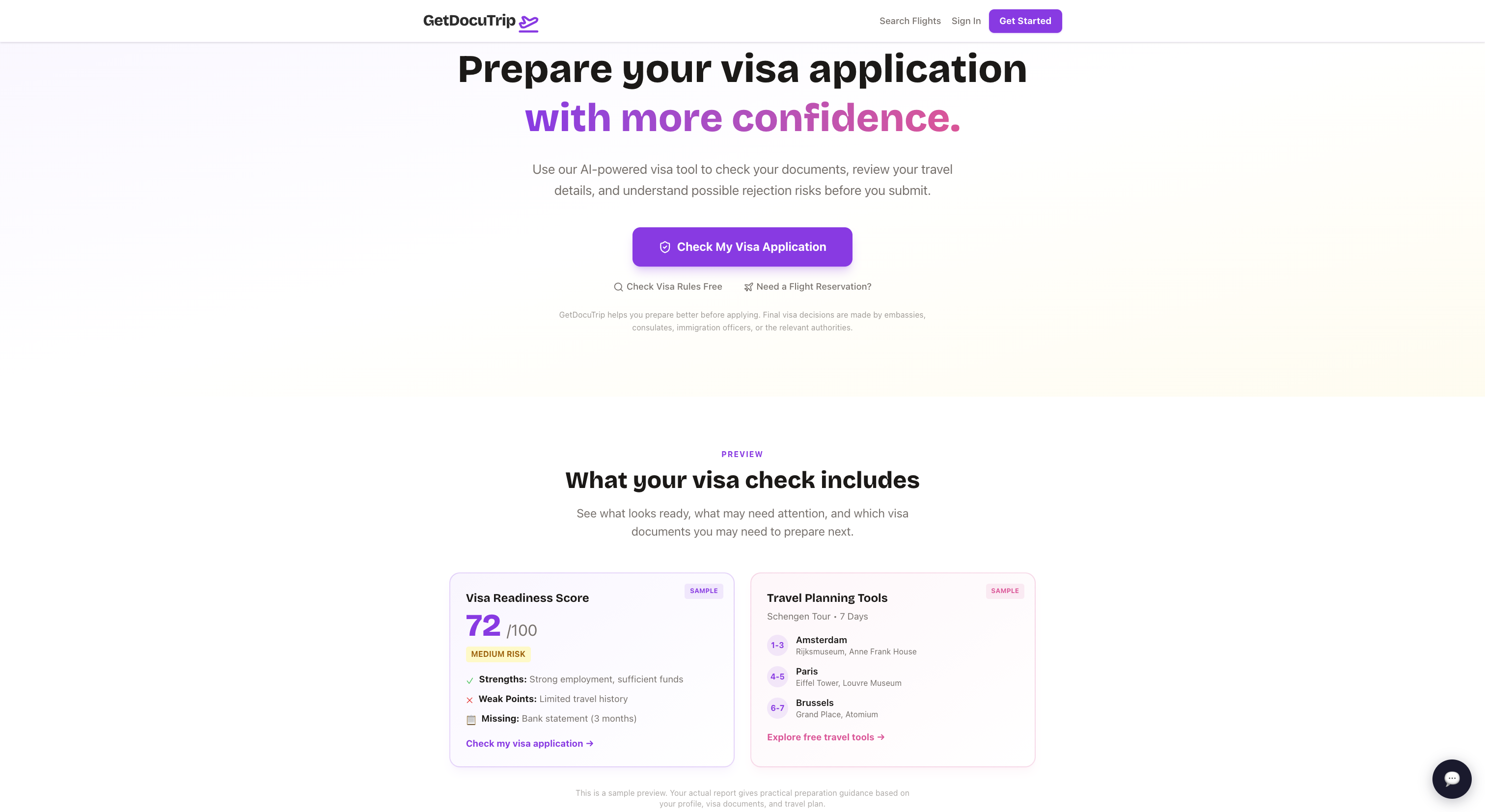 GetDocuTrip
 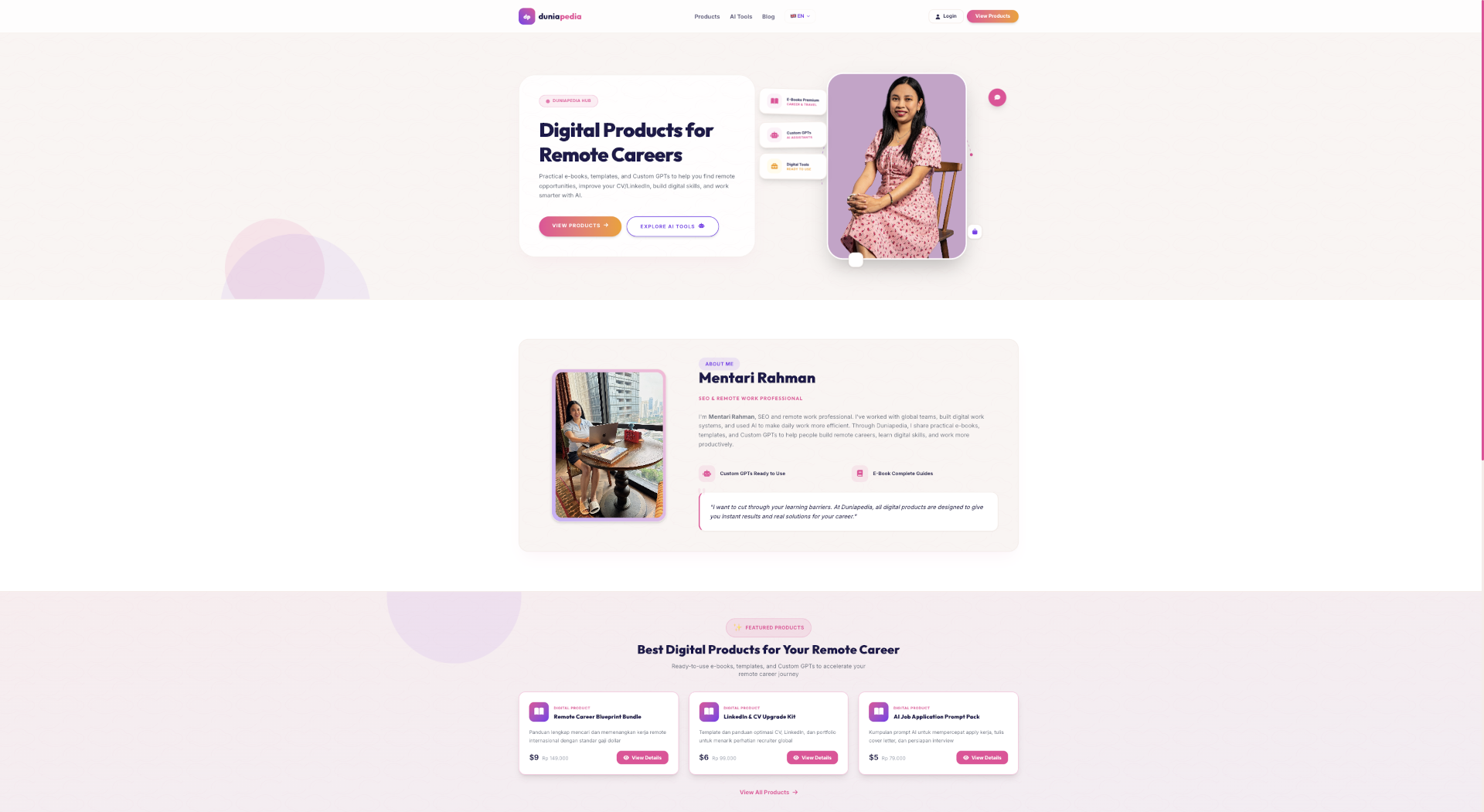 Duniapedia
 The screenshots show selected visible interfaces. Visit the individual project pages for more context about scope, ownership, and limitations.
What we need from you
Inputs for useful decisions.
- Business goals and primary visitor actions
- Existing brand, content, domain, and platform access
- Required integrations, publishing workflow, timeline, and constraints
- Content, copy, and imagery that should appear on the site
Engagement approach
A scope matched to the decision.
Scope a launch, redesign, or focused improvement; agree ownership and integrations; then deliver in reviewable stages with testing, handover, and an agreed maintenance path.
Relevant experience
Factual work behind the service.
Mentarich's GetDocuTrip venture demonstrates a production web platform with user workflows, AI features, integrations, analytics, and infrastructure we operate ourselves. Duniapedia adds a content and commerce platform with structured navigation. Both products are live and documented as case studies.
Service overview
A practical approach to web development.
A website has to explain an offer, make the next step easy, and remain practical to publish and maintain. We connect content structure, interface design, development, integrations, accessibility, performance, and technical search fundamentals in one delivery process. The work covers discovery and scoping, information architecture, interface design, frontend development, CMS and publishing workflows, ecommerce and conversion flows, integrations, accessibility, performance, technical SEO foundations, testing, deployment, and handover. You receive a written scope, working builds in reviewable stages, and documentation the team can use after launch.
Good fit
When this service is useful.
- Businesses replacing a slow, dated, or difficult to manage website
- New products that need a credible launch site or focused landing pages
- SaaS and service companies that need clear pricing, signup, or lead paths
- Teams consolidating disconnected content, commerce, or lead workflows
- Companies preparing a redesign that must protect existing search visibility
- Organizations that need a maintainable platform with clear ownership after launch
Problems addressed
Move from friction to a focused plan.
- The website is slow, dated, or difficult to update
- Visitors cannot understand the offer or next step
- A new product needs a credible launch experience
- Content and commerce systems no longer fit the business
- Publishing depends on a developer for every routine change
- The site fails accessibility, performance, or search basics
Scope options
Capabilities selected around the project.
These are areas Mentarich can include; the written project scope defines the actual deliverables.
SaaS marketing sites
Landing pages
Ecommerce
Website redesigns
Content platforms
CMS implementation
Integrations
Accessibility and performance
Technical SEO foundations
Testing and QA
Deployment and handover
What the work covers
Web development, explained in working parts.
Each area below describes a type of work Mentarich can deliver. Your project scope defines what we actually do.
Work area 01
Discovery and scoping
A website gets easier to build when the goal is explicit. We agree the purpose, the audience, and the visitor actions that matter, so build decisions follow a clear direction.
- A written scope that names the pages, features, and responsibilities
- A clear definition of the primary visitor actions and how the site supports them
- Content, access, and integration requirements collected before design starts
- A milestone plan that fits the budget and the timeline you can support
- Open questions flagged early instead of discovered late
Work area 02
Information architecture
Visitors decide in seconds whether a site is useful. We organize pages, navigation, and content around the tasks people arrive with, so the structure supports the business instead of hiding it.
- Page and navigation structure reviewed against visitor tasks
- Content hierarchy that keeps one clear message per page
- URL structure and internal links planned from the start
- Content templates that make future publishing consistent
- Search friendly structure that also guides people to the next step
Work area 03
Interface design
Design earns trust when it communicates the offer clearly. We build responsive layouts, consistent components, and visual direction that match the brand and make the next action obvious.
- Responsive layouts for phones, tablets, and desktops
- A consistent component and spacing system
- Typography, color, and contrast that meet accessibility needs
- Visual hierarchy that leads the eye to the important action
- Design review against the brand and the visitor journey
Work area 04
Frontend development
The frontend is what people see and use. We build it with maintainable code, semantic markup, and components the team can update without fragile workarounds.
- Semantic HTML that works for browsers and assistive technology
- Component based code that is easy to extend and test
- Consistent state handling for forms, errors, and loading
- Modern frameworks chosen for the project, not for fashion
- Code review and linting as part of the workflow
Work area 05
CMS and publishing workflows
A website only stays useful when the team can update it. We set up a publishing workflow your staff can run without a developer for routine changes.
- A CMS selected for who publishes and how structured the content is
- Content models and templates that keep pages consistent
- Roles and permissions that match the team
- An editorial workflow for drafts, review, and publication
- Documentation that explains how to publish and what to avoid
Work area 06
Ecommerce and conversion flows
Commerce works when browsing and checkout feel obvious. We plan product discovery, cart, payment, and order handling as one flow instead of separate screens.
- Product browsing and filtering that fit the catalog size
- Cart and checkout flows with clear steps and feedback
- Payment provider integration with the right region and currency support
- Order confirmation, receipts, and customer communication
- Conversion paths reviewed for friction, trust, and clarity
Work area 07
Integrations
Most businesses run on connected tools. We integrate the systems that matter and document the data flow so the site works with the rest of the operation.
- Forms connected to the CRM, email, or spreadsheet the team uses
- Payment, booking, or membership integrations where required
- Analytics and tagging set up with a clear measurement plan
- API connections reviewed for permissions, limits, and failure handling
- Documentation of what connects to what and who maintains it
Work area 08
Accessibility
A site that excludes visitors loses trust and business. We build to WCAG standards so people using keyboards, screen readers, or low vision support can complete the same tasks.
- Keyboard navigation that covers every interactive element
- Screen reader support through semantic markup and labels
- Color contrast that meets WCAG AA on text and controls
- Focus states visible for every link, button, and field
- Accessibility checks as part of the testing cycle
Work area 09
Performance
Speed affects trust, conversions, and how search systems evaluate the site. We set performance targets and verify them on real devices instead of guessing.
- Core Web Vitals targets agreed before the build
- Optimized images, fonts, and assets with real load budgets
- Caching and delivery configured for the hosting setup
- Performance tested on mobile networks, not just fast connections
- A monitoring plan that catches slowdowns after launch
Work area 10
Technical SEO foundations
Search visibility starts with a site search systems can reach and read. We build crawlable structure, metadata, and schema so the technical layer does not hold the content back.
- Crawlable structure with clean URLs and a clear sitemap
- Unique titles, descriptions, and canonicals on every page
- Semantic headings and structured data where they add clarity
- Redirect planning for redesigns and page moves
- Indexability checks before launch and after changes
Work area 11
Testing and quality assurance
Launching with known bugs is a choice, not a requirement. We test the build against the agreed scope so issues surface before customers see them.
- Functional testing of forms, flows, and integrations
- Cross browser and cross device checks on real viewports
- Automated tests for critical paths that regress often
- Content, link, and accessibility checks before launch
- A clear report of what was tested and what remains
Work area 12
Deployment, handover, and maintenance
Launch is the start of the relationship with the site. We ship with documentation, hand over access and knowledge, and agree what happens after go live.
- Deployment setup that the team can repeat and roll back
- Documentation for publishing, access, and common fixes
- Training or handover notes for the people who run the site
- Monitoring and error tracking after launch
- A maintenance plan covering fixes, updates, and improvements
Deliverables
What you receive.
- A written scope with agreed pages, features, and responsibilities
- Design direction and responsive layouts for the agreed pages
- Built pages with semantic markup and maintainable code
- CMS setup or publishing workflow the team can run
- Integrations, analytics, and technical SEO foundations included in the build
- Testing report, deployment, documentation, and handover
Timeline
How the work is paced.
A focused landing page or marketing site can launch in two to four weeks once content and access are ready. Larger platforms, ecommerce builds, and redesigns are planned by milestone because scope, integrations, and approval cycles vary. We agree the milestones before the build starts.
Limitations
What we do not promise.
We build and test the agreed scope, but we do not guarantee traffic, rankings, or sales. Those depend on the offer, market, content, and factors outside the build. Third party platforms, payment providers, and external APIs can change their policies and behavior, so we document assumptions and keep maintenance scoped.
Process
Clear decisions from discovery to improvement.
- 01
Discover
Clarify goals, users, content, and technical constraints
- 02
Prioritize
Map the experience and establish the visual direction
- 03
Deliver
Build, integrate, and review in working increments
- 04
Improve
Test, launch, document, and plan improvements
Technology
Tools chosen to fit the work.
Technology choices depend on existing systems, constraints, access, and long-term ownership needs. This list reflects tools Mentarich may work with, not a mandatory stack.
- Astro
- React
- Next.js
- TypeScript
- Tailwind CSS
- WordPress
- Shopify
- Cloudflare
- Docker
FAQs
Useful answers before we start.
Can you redesign an existing website?
Yes. We assess what is already useful, improve the information architecture and interface, and plan content migration without assuming that every project needs a complete rebuild.
Do you build with a CMS?
Yes. The right CMS depends on who publishes, how structured the content is, and which integrations are required. We recommend a maintainable fit rather than forcing one platform.
Is SEO included in development?
Technical SEO fundamentals, semantic structure, metadata support, performance, and crawlability are part of the build. Research, content strategy, digital PR, and ongoing search work can be scoped separately.
How long does a website take to build?
A focused landing page or marketing site can launch in two to four weeks once content and access are ready. Larger platforms, ecommerce builds, and redesigns are planned by milestone because scope and integrations vary.
Do you build ecommerce sites?
Yes. Ecommerce work can include product browsing, cart and checkout flows, payment integrations, and order handling. We confirm the platform and payment provider early because they shape the rest of the build.
Will the website work well on mobile?
Responsive design is part of every build. We test layouts on phones, tablets, and desktops rather than treating mobile as an afterthought.
Can you integrate with our existing tools?
Often, yes. We review the available APIs, permissions, and data flows before proposing an integration. The written scope defines what connects to what.
What happens after launch?
The agreed handover can include documentation, access transfer, training, monitoring, fixes, and a separate maintenance or improvement plan.
Project enquiry
Discuss your web development project.
Tell us what exists today, what needs to change, and any constraints we should understand. We will respond with questions and a practical next step.